


Intrinsiq Value
How Highland moved from Excel-based valuations to an IPEV-compliant, audit-ready valuation process
Background
Highland Europe is a growth-stage investment firm backing leading European software companies. With institutional LPs and regular reporting cycles, portfolio valuations play a critical role in governance, decision-making, and external reporting.
As a private markets investor, Highland Europe follows the International Private Equity and Venture Capital Valuation Guidelines (IPEV). These guidelines require portfolio companies to be valued at fair value, using consistent methodologies, assumptions, and market inputs.
As the portfolio scaled, Highland Europe set a clear objective: portfolio valuations needed to be IPEV-compliant, consistently measured at fair value, and fully defensible in audit reviews.

“Moving our valuation process out of Excel into a single, IPEV-compliant platform has significantly improved transparency and simplified our collaboration with auditors.”
John Wallwork, Senior Portfolio & Fund Financial Controller
The challenge
Historically, portfolio valuations were managed primarily in Excel. While spreadsheets offered flexibility, they became increasingly difficult to manage as the portfolio grew in size and complexity. Several structural challenges emerged:
- Valuation models, assumptions, and inputs were spread across multiple Excel files
- Version control and change tracking were difficult to manage over time
- Applying fair value principles consistently across portfolio companies required manual checks
- Cap tables and waterfall calculations were complex and error-prone when maintained manually
- Audit reviews involved extensive back-and-forth to reconcile changes and validate assumptions
Although the process worked at smaller scale, Excel lacked the structure, traceability, and governance required for a portfolio-wide, IPEV-compliant valuation process.
The solution
To address these challenges, Highland Europe implemented Intrinsiq to move portfolio valuations out of Excel and into a centralized platform designed specifically for private market valuations. Intrinsiq provides an end-to-end valuation workflow that standardizes fair value calculations, automates complex ownership structures, and supports direct collaboration with auditors.
Below are the key elements of Highland Europe’s valuation workflow using Intrinsiq.
1. Moving from Excel to a centralized valuation platform
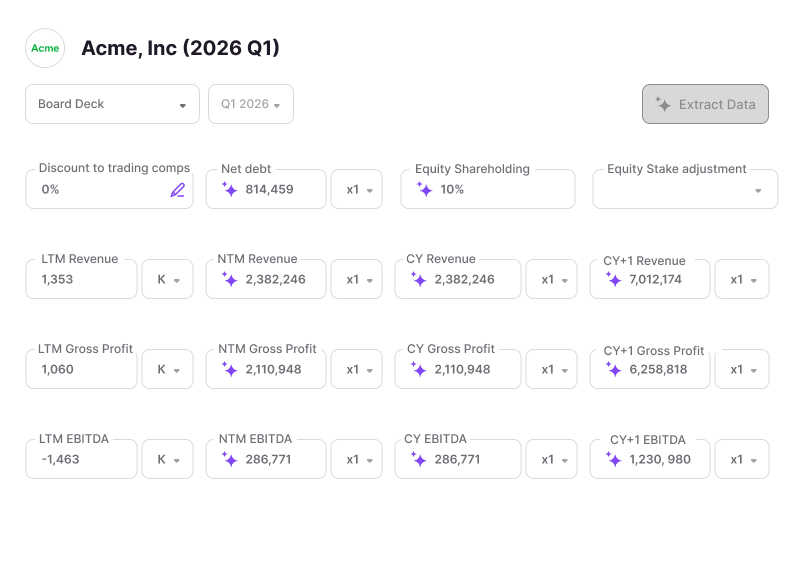
Managing valuations across multiple spreadsheets made it difficult to maintain consistency and oversight. Intrinsiq replaces fragmented Excel workflows with a single, structured platform where all valuation data is centralized. Valuation inputs, assumptions, and outputs are maintained in one system, creating a single source of truth across the portfolio.
2. IPEV-compliant fair value valuations by default
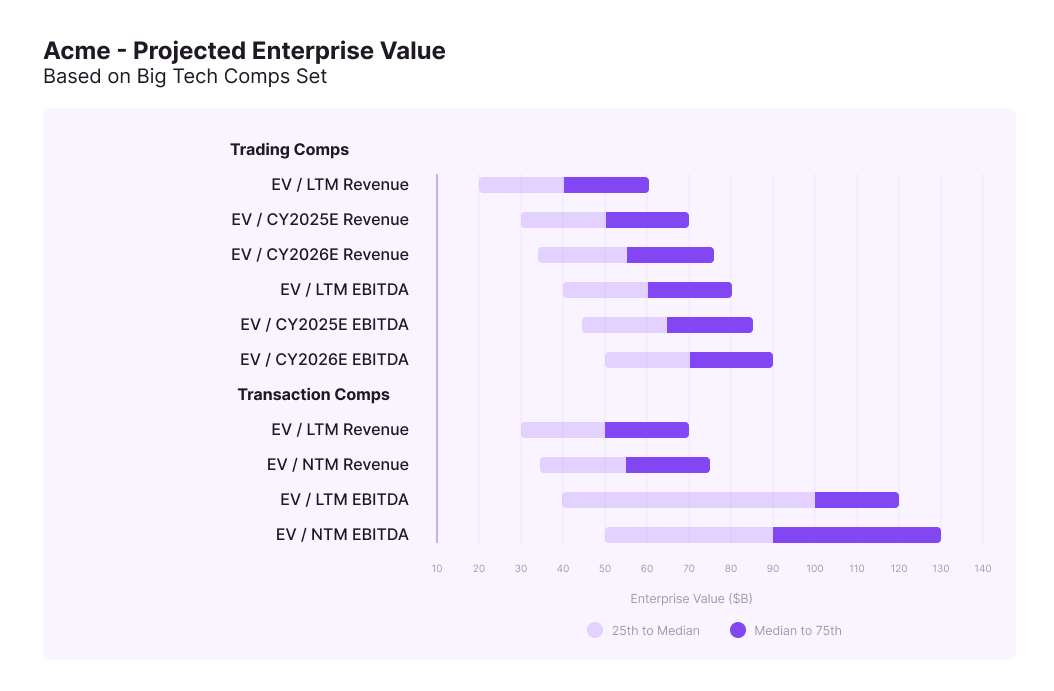
Under the IPEV Guidelines, portfolio companies must be valued at fair value using consistent valuation methodologies and assumptions. Applying these principles consistently across a diverse portfolio required significant manual effort when done in spreadsheets.
Intrinsiq enforces fair value logic across all portfolio companies while maintaining transparency into how valuations are derived. Assumptions, methodologies, and valuation outcomes are clearly documented and consistently applied. This ensures valuations are prepared in line with IPEV guidelines from the outset, rather than adjusted retroactively at quarter-end.
3. Automated cap table and waterfall calculations
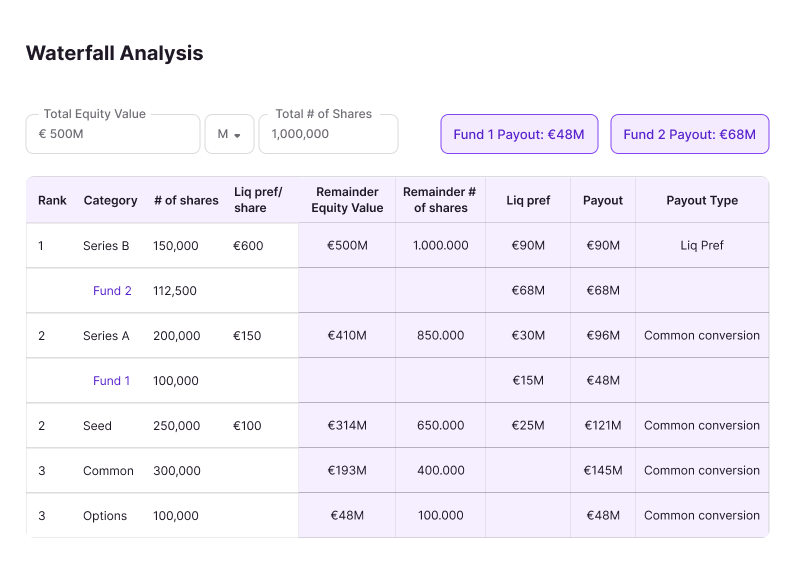
Cap table management and waterfall calculations are among the most complex aspects of private company valuations. Preference stacks, conversion rights, and dilution scenarios are difficult to model accurately and consistently in Excel.
Intrinsiq automates cap table parsing and waterfall calculations, ensuring ownership structures and economic outcomes are accurately reflected in portfolio valuations. Changes to capitalization or terms are immediately reflected in valuation outputs. This removes manual reconciliation and reduces the risk of errors in valuation models.
4. Audit-ready valuations and streamlined auditor collaboration
Audit reviews often require extensive follow-up to validate valuation assumptions and understand changes over time. When valuations are managed in spreadsheets, this typically involves sharing static files and lengthy explanations.
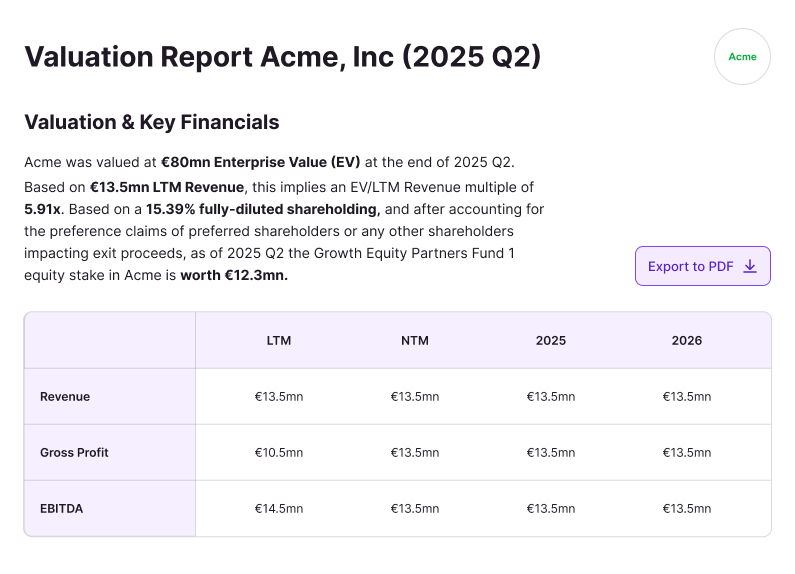
With Intrinsiq, Highland Europe provides auditors with direct access to the platform. Auditors can review valuation logic, track changes across reporting periods, and validate assumptions directly within the system. All changes are fully traceable, creating a clear audit trail that simplifies reviews and reduces back-and-forth during audit cycles.
The impact
By moving portfolio valuations out of Excel and standardizing workflows in Intrinsiq, Highland Europe achieved meaningful operational and governance improvements:
- More consistent application of IPEV-compliant fair value principles
- Reduced audit review time through improved transparency and traceability
- Fewer audit follow-up questions due to clearer documentation and data lineage
- Improved confidence in quarterly valuation and reporting processes
Valuations are now prepared with audit review in mind from the outset, rather than reconstructed at quarter-end.
Why it matters
For investment firms like Highland Europe, portfolio valuations are more than a reporting requirement. They underpin LP trust, audit efficiency, and internal decision-making.
By replacing Excel with a structured, IPEV-compliant valuation platform and enabling closer collaboration with auditors, Intrinsiq helps investment teams scale valuation processes without sacrificing rigor or control.
A practical next step
If you are unsure whether your current valuation process is ready for the updated IPEV expectations, the most useful next step is usually a gap assessment.
We are offering a complimentary 30-minute review of your current valuation workflow to help identify where the main pressure points may be under IPEV 2025.
No pitch. Just practical guidance on:
- calibration at each measurement date,
- where simplified allocation methods may no longer be sufficient,
- treatment of hybrid instruments,
- documentation and traceability gaps,
- and what auditors are most likely to challenge first.

.jpg)